Real Estate Tech Startups Driving Innovation in Property Markets
Real estate technology startups, often called proptech startups, are companies that leverage software, data, and emerging technologies to transform how property is bought, sold, managed, financed, or experienced. These startups sit at the intersection of real estate and technology, challenging legacy processes, enhancing transparency, and spurring better decision-making across stakeholders.
In the age of digital transformation, real estate tech startups have grown rapidly. They streamline workflows, reduce friction, and enable new business models across residential, commercial, and industrial property sectors. In this article, we’ll explore:
-
What defines a real estate tech startup
-
Core strategies and business models
-
Technology integration and competitive advantages
-
Real-world startup examples and their offerings
-
Use cases solving real problems
-
Benefits of adopting these technologies
-
FAQs to clarify key aspects
What Are Real Estate Tech Startups & Why They Matter
Real estate tech startups are businesses that apply technology solutions to real estate challenges. That might include platforms for property search, transaction marketplaces, digital closing, property management automation, financing solutions, data analytics, smart building systems, and innovations in leasing or construction.
These startups matter because the real estate industry has long been criticized for inertia, inefficiencies, opacity, and paper-based processes. Proptech startups inject innovation: faster transactions, better data, automation, and enhanced user experience.
Because real estate operates at high capital scales and involves many stakeholders (owners, developers, brokers, tenants, lenders), successful tech startups must navigate regulatory, operational, and market complexities. The challenges are high, but so is the potential upside, as even small improvements in workflow or data insight can yield large value in property investment, development, or operations.
Strategies, Business Models & Market Focus
Platform & Marketplace Models
Many real estate tech startups adopt a platform or marketplace model: they connect supply with demand (e.g., buyers with sellers, tenants with landlords) via digital platforms. These models generate value by reducing search costs, improving matching, and streamlining transactional steps.
For example, a startup might allow landlords to list directly, integrate with financing or rental insurance, or offer digital lease signing and payments. Over time, network effects strengthen the platform, attracting more users and making it harder for new entrants to displace them.
SaaS / B2B Solutions for Real Estate Professionals

Another common model is B2B SaaS (Software as a Service) targeting brokers, property management firms, developers, or investors. These solutions may automate listing management, CRM, maintenance workflows, tenant screening, leasing analytics, or portfolio dashboards.
Such startups embed deeply into professional workflows, making their tools indispensable and sticky once adoption occurs.
Embedded FinTech & Transactional Innovation
Some proptech firms embed financial lending or payment services. For instance, they may offer bridging capital, escrow automation, fractional investment models, or tokenization of property shares. By combining real estate and fintech capabilities, these startups can capture value across multiple stages of the property lifecycle.
Vertical or Niche Focus
Some startups specialize in particular niches commercial property leasing, short-term rentals, co-working space optimization, industrial property management, or construction tech (ConTech). Focusing on a vertical allows them to tailor features, compliance, and data models for that domain, giving them an edge over more generic platforms.
Technology Integration & Competitive Advantages
Data Analytics, AI & Predictive Modeling
Real estate tech startups often build proprietary analytics systems that ingest and analyze large volumes of data: property characteristics, market comparables, transaction histories, supply-demand metrics, demographics, zoning, macroeconomics, and more.
Using AI and predictive modeling, they forecast property values, rent trends, vacancy risk, or investment yield. This capability allows faster underwriting decisions, smarter pricing, and better risk management.
Also, image-based AI (e.g, vision transformers applied to property photos) helps startups automate property valuation or detect condition issues. (See research applying self-supervised vision transformers to real estate valuation.)
Automation, IoT & Smart Building Systems
Many startups integrate Internet of Things (IoT) sensors and automation in buildings: for energy management, HVAC control, lighting, occupancy tracking, predictive maintenance, and security systems. These systems generate ongoing operational savings and provide performance data that can feed into broader analytics.
By automating routine building operations, startups reduce human intervention, detect anomalies earlier, and optimize resource consumption.
Digital Workflows & Process Automation
Proptech startups streamline traditionally manual and paper-based processes: digital document signing, e-conveyancing, lease execution, inspection reports, maintenance request automation, payment collections, and compliance workflows.
By reducing friction, errors, and delays, these systems improve speed and transparency for all parties.
APIs, Integration & Ecosystem Building
Successful startups design their systems to integrate with existing too, such as MLS, CRM, ERP, financial platforms, mapping APIs, blockchain services, and more. Open or semi-open APIs help them embed into the broader real estate tech ecosystem and create additive workflows rather than forcing legacy abandonment.
The ability to plug into adjacent ecosystems helps startups scale faster and strengthen competitive defensibility.
Real-World Examples & Use Cases
Below are examples of real estate tech startups (or proptech firms) that illustrate different approaches and contributions. Each example emphasizes how its model, technology, or offering addresses real industry problems.
(Insert image of a proptech app or coworking space)
Example 1: SmartRent (Residential / Property Operations)

SmartRent offers a platform enabling property owners and managers to automate and manage smart home features, access control, building devices (e,.g. locks, thermostats, sensors), and resident engagement tools.
Their solution integrates hardware and software. On the hardware side, SmartRent deploys sensor-based devices in units and common areas; on the software side, they provide dashboards for monitoring, automation rules, and tenant controls.
SmartRent exemplifies a startup bridging real estate operations and IoT/smart building tech. Their offering reduces operational overhead, enhances resident experience, and adds value to property owners by leveraging data to optimize energy use, maintenance timing, and facility operations.
Example 2: REZI (Fully Automated Rental Marketplace)
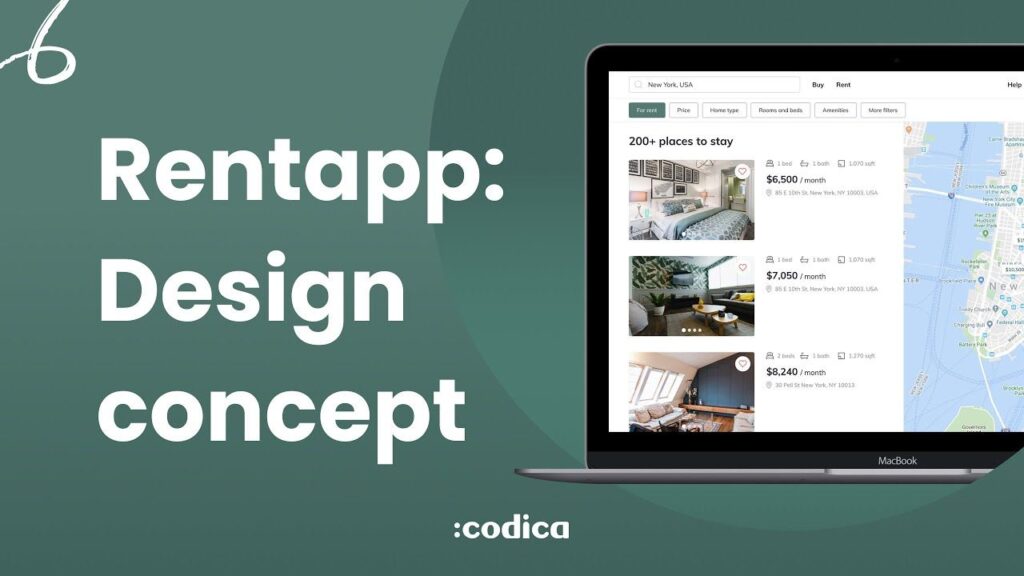
REZI is a real estate tech startup focusing on long-term apartment rentals. It offers a fully remote and automated marketplace model for renting apartments.
Onboarding, application processing, lease signing, payments, and renewals are digitized. REZI aims to simplify leasing operations for building owners while improving the tenant experience through streamlined digital flows.
This example shows how proptech can transform leasing workflows, minimizing friction for both landlords and tenants, accelerating occupancy, and generating operational efficiencies.
Example 3: Anyone.com (Digital Transactions & Ownership Models)

Anyone.com is a proptech platform that allows real estate transactions to be managed digitally buying, selling, and agent interactions.
They also launched an integrated mortgage model (“Anyone Mortgage”) that lowers barriers. To own payment) by allowing mortgage providers to take partial ownership of a property. This approach blends real estate, financial structuring, and digital platforms.
Anyone.com exemplifies the merging of transaction facilitation and financing embedded into proptech, expanding how property deals are structured and executed in a digital-native way.
Example 4: Brickbro (Commercial Space Discovery)
Brickbro is a proptech startup focused on commercial real estate. It simplifies the process of searching, comparing, and renting commercial spaces online, aggregating supply, and enabling digital contracts.
By offering a platform for commercial landlords and tenants to transact digitally, Brickbro addresses a traditionally opaque and slow commercial real estate leasing sector.
Example 5: Nestopa (AI-driven Real Estate Marketplace in Thailand)
Nestopa, a Thai real estate platform launched in 2023, integrates AI features for listing creation, image description generation, and agent visibility ranking.
Their marketplace uses AI to help agents and property seekers optimize listing quality, discover matching properties more intelligently, and streamline listing operations. This example shows how proptech is evolving globally, even in markets outside the traditional U.S. tech hubs.
Use Cases & Real-Life Problem Solving
Use Case: Automating Leasing and Tenant Onboarding
Problem: Traditional leasing often involves paper applications, manual credit checks, manual signatures, and delays. Tenants and landlords both endure friction.
Solution: Proptech startups digitize the entire leasing pipeline: applications, identity verification, credit checks, lease signing, and payments. This speeds occupancy and reduces administrative load.
Impact: Landlords can fill vacancies faster; tenants enjoy seamless, consistent experiences, and overhead cost is lowered.
Use Case: Energy Efficiency & Predictive Maintenance
Problem: Building systems (HVAC, lighting, pumps) often fail or degrade without early warning, leading to downtime, high repair costs, and occupant complaints.
Solution: IoT sensors and building data platforms can monitor equipment health, detect anomalies, forecast wear, and schedule maintenance proactively.
Impact: Fewer emergency repairs, lower energy consumption, better capital planning, and improved occupant satisfaction.
Use Case: Digital Real Estate Transactions & Embedded Finance
Problem: Real estate transactions remain slow, paperwork-heavy, and often expensive in terms of commissions, intermediaries, and friction.
Solution: Platforms like Anyone.com embed transaction workflows and financial structuring (e.g., shared-equity mortgages) to simplify buying and selling.
Impact: Fewer barriers to entry for buyers, faster transaction cycles, lower costs, and more transparent ownership structures.
Use Case: Data-Driven Asset Management & Portfolio Optimization
Problem: Real estate owners and investors may lack visibility into performance metrics, cost anomalies, or market trends, leading to suboptimal capital allocation.
Solution: Proptech platforms aggregate property-level data (income, expenses, leasing metrics, utilization) and provide dashboards, alerts, and predictive analytics.
Impact: Better decision-making, early detection of underperforming assets, more efficient capital deployment, and higher overall returns.
Use Case: Commercial Space Discovery and Leasing
Problem: Finding, comparing, and leasing commercial real estate (offices, retail, industrial) remains slow, fragmented, and opaque.
Solution: Platforms like Brickbro aggregate listings, standardize search, provide digital lease tools, and enable streamlined transactions for commercial tenants and landlords.
Impact: Faster deal cycles, improved transparency, better matching, and access to a broader market.
Benefits & Advantages of Real Estate Tech Startups
Operational Efficiency & Cost Savings
By automating repetitive tasks (e.g, lease processing, service request routing, maintenance workflows), proptech startups free human capital for higher-level tasks. Property managers and leasing agents can focus on strategy, tenant relationships, and growth rather than paperwork.
Cost savings come from reduced manual labor, fewer errors, lower overhead in document handling, and more efficient vendor management.
Enhanced Speed & Market Responsiveness
Digital platforms enable faster decision-making, whether in leasing, underwriting, or property management. Startups that use predictive modeling and automation can respond quickly to market shifts, optimizing rental pricing, identifying trends, or reallocating capital rapidly.
Improved Data Transparency & Intelligence
Proptech firms capture and unify data streams across portfolios, leasing metrics, market comps, occupancy, cost trends, and building performance. This visibility enables deeper insight, cross-asset benchmarking, and smarter strategies for growth.
Better Tenant Experience & Retention
Tenants expect digital convenience: online rent payments, maintenance requests, lease renewals, dashboards, and communication tools. Startups that deliver these improve satisfaction and retention, reducing vacancy and turnover costs.
Scalable Growth & Platform Leverage
Once a tech platform is built, adding new customers or properties has relatively low marginal cost. This scalability allows startups to grow faster than traditional real estate service models constrained by human scaling. As the user base grows, network effects can further strengthen the platform.
Differentiated Market Position & Investment Appeal
Real estate tech startups offer a disruptive narrative and differentiation in a traditionally slow-moving industry. They attract investor attention because they combine real assets with technology upside. Successful startups can scale beyond regional boundaries and replicate their models in multiple markets.
Risk Mitigation & Predictive Control
AI and analytics enable early detection of anomalies (e.g, expense spikes, drooping occupancy, maintenance issues). Proactive alerts help leadership respond before minor issues cascade. This predictive control fosters more resilient portfolios.
Frequently Asked Questions (FAQs)
Q1: What distinguishes a real estate tech startup from a traditional real estate company?
A real estate tech startup embeds technology at the core of its business model. It is not just a real estate company that “adds software,” but one that uses data, automation, AI, and platform thinking to disrupt processes. Traditional real estate firms often rely heavily on manual workflows, human intermediaries, and legacy systems. Tech startups aim to streamline, scale, and reimagine value chains.
Q2: How do proptech startups generate revenue?
Common revenue models include:
-
Transaction fees or commissions on marketplace platforms
-
SaaS subscription fees for software tools used by real estate professionals
-
Revenue share or margins on embedded finance products (e.g., lending, fractional ownership)
-
Premium services or feature upgrades (e.g., analytics, integrations)
-
Licensing of data or API access to third parties
Q3: What are the biggest challenges proptech startups face?
Challenges include:
-
Regulatory and legal complexity (zoning, real estate law, lending regulation)
-
Integration with legacy systems and poor data quality
-
High capital requirements and slow adoption cycles in real estate
-
Trust and credibility: real estate deals are high-stakes, so buyers and landlords demand reliability
-
Scaling across markets with different regulations, market dynamics, and user behaviors