Properties Investment Strategy, Technology & Real-World Insights
Property investment (or property investment) refers to acquiring real estate assets with the intent to generate income, capital appreciation, or both. Unlike simply owning a home, property investment is a purposeful business model: investors analyze markets, manage assets, and optimize returns across residential, commercial, industrial, or mixed-use sectors.
In an age where data, technology, and sustainability increasingly shape real estate, understanding how property investment works and how to do it well is essential. This article delves deep into the mechanics, strategies, benefits, challenges, technology integration, real-world examples, practical use cases, and key FAQs around property investment.
What Properties Investment Is & Its Core Concepts
Defining Properties Investment
Property investment involves purchasing real estate assets (land, buildings, or improvements) with the expectation of generating returns over time. Returns typically stem from two sources: rental income (cash flow) and capital appreciation (increase in value). Unlike speculative real estate trading, successful property investment emphasizes long-term planning, diligence, and active management.
Investors may invest in different property types, residential (single-family homes, multi-family units, condos), commercial (offices, retail, warehouses), industrial, or mixed-use. The portfolio mix often balances income stability, growth potential, and risk.
Key Metrics & Financial Fundamentals
Understanding the financial metrics is vital in property investment. Among the most important:
-
Net Operating Income (NOI): Gross rental income minus operating expenses (not including debt service).
-
Capitalization Rate (Cap Rate): Ratio of NOI to property value, used to assess relative yield.
-
Cash-on-Cash Return: Annual cash flow divided by equity invested.
-
Internal Rate of Return (IRR): A projection of total return considering the time value of money.
-
Loan-to-Value Ratio (LTV): The ratio of mortgage debt to property value, affecting leverage.
-
Vacancy & Operating Expense Assumptions: Estimating downtime and maintenance costs.
Risk factors such as tenant credit quality, market cycles, location trends, and regulatory changes must also be baked into the models.
Forms & Structures of Property Investment
Investors can access property investment via several structures:
-
Direct Ownership: Buying, owning, and managing properties firsthand.
-
Joint Ventures / Partnerships: Pooling capital with others to acquire larger assets.
-
REITs (Real Estate Investment Trusts): Investing in publicly or privately traded trusts holding property portfolios.
-
Real Estate Funds / Private Equity Vehicles: Institutional capital for scaled investments.
-
Fractional Ownership / Crowdfunding Platforms: Smaller investors participate in property deals via digital platforms.
Each model offers tradeoffs in liquidity, control, management burden, and return potential.
Why Property Investment Is Attractive
Steady Income & Appreciation
A well-chosen property can deliver consistent rental income while the asset appreciates over time—providing both cash flow and capital growth. In many markets, property values outpace inflation, preserving investor capital.
Rental revenue acts as a hedge against market volatility: even when equities fluctuate, real estate can offer more predictable returns if managed well.
Leverage & Capital Efficiency
One of real estate’s distinct advantages is leverage: with modest capital, you can acquire larger assets via mortgages. This amplifies returns when the investment performs well, though it also magnifies risk.
By using debt responsibly, investors can increase their exposure to property assets with less upfront capital.
Diversification & Low Correlation
Real estate often exhibits different behavior than stocks or bonds, particularly in local markets. Incorporating property investments can diversify a portfolio and reduce overall volatility.
Also, because property values are tied to local economic factors, population growth, infrastructure development, and zoning, they offer a unique exposure layer not available in purely financial assets.
Tax Benefits & Depreciation
Many jurisdictions provide favorable tax treatment to property investors: deductions for interest, depreciation, property taxes, and operational expenses reduce taxable income.
Depreciation allows accounting cost recovery, even if a property actually appreciates in market value. These advantages help boost after-tax returns.
Core Components of Managing a Property Investment Business
Market Research & Location Selection
Success begins with understanding market demographics, job growth, infrastructure plans, supply pipeline, and rent trends. Investors must “buy the right location” to maximize both occupancy and capital growth.
Drill down into submarkets (neighborhoods, corridors) to find emerging districts before they become mainstream. Proximity to transit, jobs, schools, and amenities usually drives demand.
Acquisition & Due Diligence
After selecting potential properties, rigorous due diligence is essential: inspect physical condition, verify title and zoning, review lease agreements, run financial models, and stress-test assumptions.
Acquisition pricing is critical. Buying below the intrinsic value allows a margin of safety. Negotiations, creative financing, and contingency plans (repairs, vacancy) determine success.
Asset Management & Operations
Owning property is not passive. Effective asset management involves:
-
Tenant selection, credit screening, and lease management
-
Maintenance scheduling (preventive and corrective)
-
Operating expense control
-
Capital expenditure planning (roofs, HVAC, systems)
-
Renovation and repositioning
-
Rent escalations, renewals, and marketing
Maintaining high occupancy and controlling cost overruns are key to healthy returns.
Disposition & Exit Strategy
Every property investment should have an exit plan: hold, refinance, sell, or convert use. Monitoring market cycles, timing exits during peak valuations, and preparing properties for sale (curing deferred maintenance, optimizing cash flow) are necessary.
The decision to sell or hold depends on projected return vs. opportunity cost. A disciplined exit approach improves portfolio performance.
Role of Technology in Property Investment
Technology is transforming how investors research, manage, and optimize property assets. Smart integration of tech is no longer optional; it’s essential to compete.
Data Analytics & Market Intelligence
Advanced platforms aggregate rent comps, vacancy rates, demographic trends, traffic patterns, and permit data. Investors use them to identify undervalued markets or forecast rent growth.
Machine learning models help project risk scenarios, tenant default probabilities, and capital expenditure needs. This gives investors more confidence in underwriting.
Property Management & Automation Platforms
Modern property management software centralizes leasing, maintenance tickets, accounting, and communication in one system. Automation can handle rent reminders, tenant onboarding, and document workflows.
Interactive tenant portals allow self-service options for payments, maintenance requests, and lease documentsimproving transparency and efficiency.
IoT & Smart Building Technologies
Install sensors for HVAC, plumbing, lighting, occupancy, and energy use. These allow real-time monitoring and predictive alerts, reducing waste, spotting leaks early, and lowering utility costs.
Smart thermostats, controllable lighting, and occupancy-triggered systems reduce energy usage and enhance tenant comfort.
Virtual / Augmented Reality & Remote Inspections
Virtual property tours let prospective tenants preview spaces without physical visits. In renovation or repositioning, augmented reality lets investors visualize renovations or layout changes before committing.
Drones and 3D scanning speed up due diligence and condition assessment, roof inspections, facade surveys, and site mapping become safer and faster.
Blockchain & Smart Contracts
Blockchain can provide immutable records for property titles, lease agreements, and transaction history. Smart contracts may automate rent payments, security deposits, or release funds when contract conditions are met, reducing friction and risks in property deals.
Energy & Sustainability Tools
Energy management systems, carbon tracking dashboards, and sustainability benchmarking help investors optimize operational costs and appeal to ESG-minded tenants.
Green building certifications, renewables, and efficiency systems become differentiators in competitive markets.
Real-World Examples & Use Cases
Here are real-world examples and case studies illustrating prpropertynvestment strategies and how technology and best practices come into play.
Example 1: Single-Family Rental Portfolio

A professional investor acquires a small portfolio of single-family homes in growing suburban markets. Each home is rented to long-term tenants under multi-year leases.
To manage the portfolio efficiently, the investor uses property management software to track maintenance requests, automate rent reminders, and manage accounting. IoT leak detectors and smart thermostats reduce utility waste and protect the property from damage.
Relevance:
This example demonstrates how even “residential” property investment can be scaled and optimized using technology and disciplined operations, delivering stable cash flow and capital growth.
Example 2: Multi-Family Apartment Complex

A mid-sized multi-family complex in a growing urban area is repositioned: renovated common areas, upgraded units, and improved management. The investor uses analytics to set optimal rental rates, phased renovation to avoid mass vacancy, and technology to streamline operations.
They install sensors, smart locks, and access control, enabling tenants to manage access via an app. The property uses energy-efficient lighting and HVAC upgrades to reduce operating expenses.
Relevance:
Multi-family investments often deliver economies of scale in operations and capital improvements. Technology and data-driven upgrades can shift the property from average to high-performing status, increasing NOI and value.
Example 3: Mixed-Use Commercial / Residential Building

An urban mixed-use building combines ground-floor retail and upper-level residential units. The investor leases storefronts to local businesses and rents apartments above.
The management system integrates retail and residential lease tracking, shared utility billing, maintenance coordination, and tenant portals. Retail tenants have separate utility systems, but maintenance is handled by the same property staff.
Relevance:
Mixed-use properties require more complex management because of varied tenant types. But they also offer diversification (income from retail and residential) and synergy if managed well.
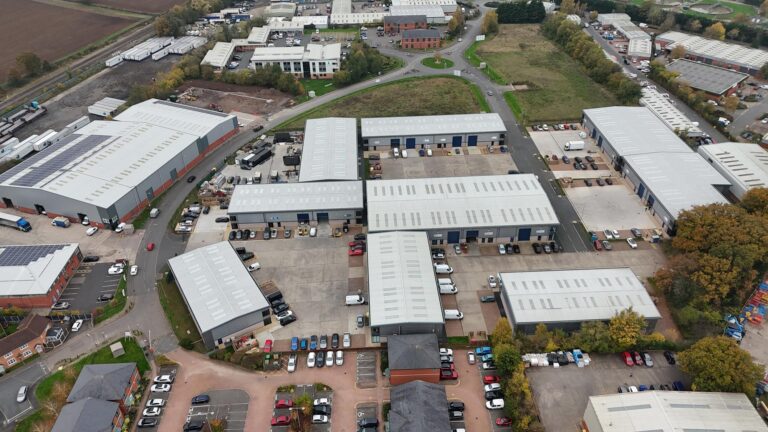
Example 4: Industrial / Warehouse Investment

An investor owns a warehouse near logistics corridors and leases it to distribution or e-commerce firms. The property is outfitted with high ceilings, dock doors, and automated systems.
Sensors track HVAC, structural conditions, and energy usage. Drone inspections monitor roof condition. The investor uses predictive models to anticipate preventive maintenance and avoid downtime.
Relevance:
Industrial property investments demand high technical oversight. But with efficient management, such assets often yield stable returns and strong tenant retention, especially in high-demand logistics zones.
Benefits & Practical Advantages
Improved Efficiency & Cost Reduction
Technology and data allow investors to streamline operations, reduce waste, and automate tasks. Maintenance, tenant management, billing, and communications become more efficient, reducing overhead.
Scalability & Portfolio Growth
When systems, processes, and platforms are in place, scaling becomes manageable. Investors can replicate successful models across new properties, expanding faster with less friction.
Risk Mitigation & Predictive Maintenance
Monitoring systems catch issues early, ea leaksHVAC anomalies, structural shifts, before they escalate. This avoids major repair costs, downtime, and tenant dissatisfaction.
Tenant Experience & Retention
Tenant portals, fast maintenance response, transparent billing, and smart building features improve tenant satisfaction and reduce turnover. Longer lease durations stabilize cash flow.
Value Creation & Asset Appreciation
By improving NOI (reducing expenses, enhancing rent), investors increase property valuations. Efficient properties with modern features and lower operating costs are more attractive to buyers refinancinging.
ESG & Market Differentiation
Sustainable systems, energy efficiency, and carbon tracking appeal to institutional tenants and investors with ESG mandates. These features often unlock better financing terms, tax incentives, or premium rent.
Use Cases: Problems Solved by Properties Investment
Use Case 1: Housing Demand & Income Generation
Problem: Urban areas are facing housing shortages and rising rental demand.
Solution: Investors develop or convert properties into multi-family units or affordable housing to provide much-needed inventory and generate reliable rental income.
Use Case 2: Portfolio Diversification in Volatile Markets
Problem: Investors overly exposed to equities or fixed income suffer during market downturns.
Solution: Property investment provides an asset class with lower correlation to stocks and bonds, offering stability and consistent cash flow.
Use Case 3: Passive Income for Retirement or Financial Freedom
Problem: Many people seek passive income streams to support retirement or side income.
Solution: Properly managed rental properties can become long-term passive income sources, especially when leveraging technology and property managers.
Use Case 4: Upgrading Underperforming Real Estate
Problem: A property is underperforming due to poor management, outdated systems, or high expenses.
Solution: A value-add investor can reposition, renovate, optimize operations via technology, and lease-up to improve cash flow and resale value.
Use Case 5: Meeting ESG and Sustainability Goals
Problem: Investors or tenants demand green buildings, energy efficiency, and carbon accountability.
Solution: Retrofitting properties with smart systems, renewable energy, and sustainability features solves this demand, differentiating assets and attracting upgraded tenants.
Best Practices & Strategic Tips
-
Always prioritize location and demand fundamentals.
-
Use data and analytics to drive acquisitions and operations.
-
Choose scalable property management platforms and standard processes.
-
Embrace preventive and predictive maintenance rather than reactive fixes.
-
Design for tenant experience and communication transparency.
-
Budget properly for CapEx and modernization (plan ahead).
-
Incorporate sustainability measures to lower costs, attract capital, and future-proof assets.
-
Monitor market cycles and have disciplined exit strategies.
FAQs
Q1: How much capital is needed to start property investment?
It depends on the target and the property type. With direct ownership, many investors start with down payments (20–30%) plus reserves. But fractional ownership, crowdfunding, or REITs enable entry with far lower capital.
Q2: What are the biggest risks in property investment?
Major risks include vacancy, tenant default, market downturns, cost overruns, regulatory changes, and poor management. Technology and due diligence help mitigate them.
Q3: How quickly can one scale a property investment business?
With robust systems, automation, and standard processes, scaling can accelerate. But growth should be paced to maintain stability, control leverage, and ensure operational capacity before adding new assets.